There’s no single way to spend Christmas Eve in Canada. In Québec, it’s the night of the réveillon, a late family feast. For Ukrainian-Canadian families, it can mean the Holy Supper, which those who follow the Julian calendar hold on January 6. Other families head to midnight mass, keep the evening quiet or save the celebrating for another day.
For most families with a Scout Elf, Christmas Eve is also goodbye night, when their elf heads back to the North Pole. Here are some of the traditions that shape the evening, and a few ideas for making that farewell a gentle one.
Christmas Eve traditions across Canada
Christmas in Canada draws on French, British and American traditions, along with customs brought by many other communities. These are a few you might recognize or discover for the first time.
Le réveillon in Québec
In Québec, the réveillon (“the awakening”) is the big family meal of Christmas Eve. Traditionally it was served after la messe de minuit, midnight mass, which today often starts earlier, around 10 p.m. Many families now sit down before mass or keep the feast for Christmas Day.
The table often includes turkey and cranberries, tourtières (meat pies), pickles (marinades) and, to finish, the bûche de Noël, the Yule log cake that is the Christmas dessert. In the traditional story, Père Noël visits while the family is at mass, so gifts are opened when everyone gets home.
Sviata Vechera: the Ukrainian Holy Supper
In many Ukrainian-Canadian homes, the heart of Christmas Eve is Sviata Vechera, the Holy Supper. The meal is made up of 12 meatless dishes and begins when the first star appears in the evening sky. In farming communities, a sheaf of wheat called the didukh is brought into the house.
Families who follow the Julian calendar celebrate Christmas on January 7, so for them the Holy Supper falls on January 6.
Midnight mass, carols and the crèche
For many families, Christmas Eve is a time for church. As early as 1645, French colonists gathered in a church in Québec City for midnight mass. The Huron Carol (“Jesous Ahatonhia”), attributed to Jesuit missionary Jean de Brébeuf and written in the Wendat language, has been passed down through generations. And the Nativity scene, or crèche, has a place of honour in many homes.
A Christmas Eve first in Sorel
The first Christmas tree in North America is said to have appeared on Christmas Eve 1781 in Sorel, Québec, when Baroness Riedesel decorated a balsam fir with fruit and white candles for a party of officers.
What about mummering?
In Newfoundland and Labrador, mummering (or mumming) sees neighbours in costumes and disguises visiting each other’s homes. It belongs to the days after Christmas, though, traditionally running from Boxing night to “Old Christmas Night” on January 6.
What happens to your Scout Elf on Christmas Eve?
Scout Elves usually arrive at the start of a family’s Christmas celebrations. Most say goodbye on Christmas Eve and return to the North Pole following Santa’s sleigh, although some get special permission from Santa to stay a little longer.
If your children ask why their elf can’t stay, here are a few of the jobs waiting back at the North Pole:
- Letters to answer. Scout Elves help with the letters that keep arriving at Santa’s Mail Room Grotto.
- Training to keep up. They sharpen their skills at Scout Elf Training Camp.
- Reindeer to look after. After their long trip on Christmas Eve, Santa’s reindeer need plenty of care.
Saying goodbye to your Scout Elf
The last morning with a Scout Elf can feel bittersweet, especially for younger children. A few gentle ideas can help:
- Write a goodbye note. Children can thank their elf for the season and say what they’ll miss most.
- Share a final wish. Scout Elves can’t talk, but they are great listeners, so it’s a good moment to whisper a Christmas wish.
- Look back together. Scroll through photos of your elf’s hiding spots and choose a family favourite.
- Read the story one more time. Rereading the storybook on Christmas Eve is a lovely way to close the season.
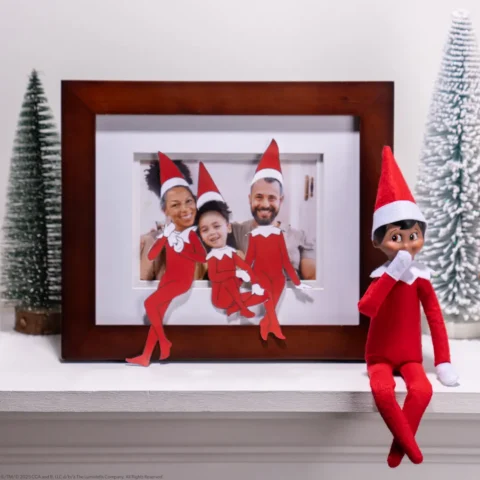
However tempting a goodbye hug might be, a Scout Elf must not be touched, or they could lose the Christmas magic they need to fly home. And if your children are sad to see their elf go, remind them that most Scout Elves come back to their families during Scout Elf Return Week™ at the end of November.
Christmas Eve FAQs
What is réveillon?
Réveillon is the big Christmas Eve family meal in Québec, traditionally served after midnight mass. Today many families enjoy it earlier in the evening or on Christmas Day.
What do people eat at réveillon?
Traditional dishes include turkey with cranberries, tourtière, pickles and other family recipes, with a bûche de Noël for dessert.
When is Ukrainian Christmas Eve?
For families who follow the Julian calendar, Christmas is on January 7, so the Christmas Eve Holy Supper is on January 6.
When does our Scout Elf go back to the North Pole?
Most leave on Christmas Eve, following Santa’s sleigh. Find out more in When Does Your Scout Elf Return to the North Pole?
Will our Scout Elf come back next year?
Yes. Most Scout Elves return during Scout Elf Return Week at the end of November. Read more in our guide to your elf’s return.
Keep exploring
New to the tradition? Discover how The Elf on the Shelf® works and where to find it in Canada.