
You can remind kids to say thank you. Encourage them to share. Ask them to wait their turn. But values like kindness, empathy, gratitude and good manners are rarely built through a single reminder.
They grow through repetition, routine, and everyday moments kids can actually feel. That’s exactly where Elf Mates® can become a gentle helping hand.
For parents looking to show kindness rather than just say it, encourage better manners naturally, or help kids build positive habits at home, Elf Mates offer a playful, story-led companion that makes everyday values feel fun instead of preachy.
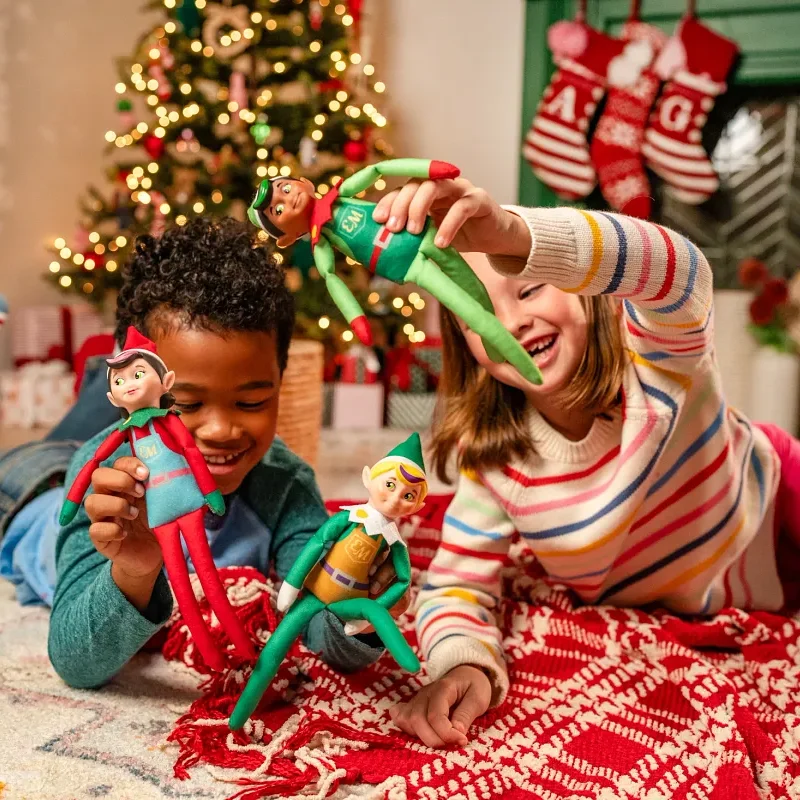
How can Elf Mates® help children learn kindness, gratitude and good manners?
Elf Mates help parents teach kindness, empathy, gratitude, sharing and everyday values through imaginative play, gentle routines and repeated small acts of care.
Rather than turning values into lectures, Elf Mates help kids practise positive behaviour in a way that feels playful, familiar and easy to fold into family life.
Unlike your Scout Elf from The Elf on the Shelf®, who reports back to Santa and heads home after the holidays, Elf Mates are Santa’s forest elves who stay and play all year long, so the lessons don’t pack up with the decorations in January.
One of the most powerful things a child can learn is gratitude. It helps them recognise the kindness around them and understand the impact a thoughtful action can have on someone else.
Over time, that emotional awareness tends to grow into empathy, generosity and stronger friendships.
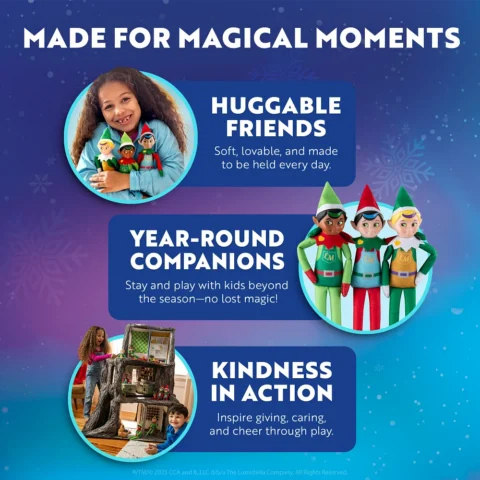
How different Elf Mates support everyday values
Each Elf Mates carries a golden heart and a mission from Santa, and each one naturally lends itself to a different kind of positive behaviour.
The Elf Mates® Chef supports generosity, care and nurturing. Helpful for sharing snacks, helping prepare meals, caring for others, and thoughtful giving.
The Elf Mates® Toy Makers supports creativity, sharing and giving. Helpful for making cards, creating gifts, sharing toys, and small acts of generosity.
The Elf Mates® Cobbler supports empathy, helping and noticing. Helpful for lending a hand, practical acts of care, tidying shared spaces, and noticing when someone needs support.
This keeps values tangible without turning every moment into a lesson.
Easy everyday ways Canadian families can use Elf Mates® at home
The beauty of Elf Mates is that they fit into ordinary family life. No elaborate set-ups, no pressure, just small moments that add up.
On a snow day or rainy afternoon indoors, kids can make a card for Grandma or Grandpa, sort books or toys to donate, share craft supplies, or create a little homemade gift.
During those classic sibling moments, Elf Mates encourage taking turns, sharing toys, including a younger sibling, and comforting someone who’s upset, useful any time you’re trapped inside during a deep freeze.
During family routines, Elf Mates can nudge kids to help tidy up after dinner, carry the groceries in from the car, share the last butter tart fairly, hold the door, wrestle off muddy boots at the back door, or pack up their own hockey bag and backpack.
Before bedtime, Elf Mates are perfect for looking back on the day’s kindness together. Try asking: Who did we help today? Who helped us today? What kind thing could we do tomorrow? These little check-ins often reaffirm positive values.
Why do children learn values through routine, not reminders?
Kids learn best when a value moves from instruction into habit.
Hearing “be kind” is helpful. Practising kindness is what makes it meaningful. When children repeat small behaviours regularly, they start to understand not just what kindness is, but what it feels like.
That’s why routine is such a powerful tool for teaching manners and emotional growth, and why a year-round companion works better than a once-a-year prompt.
If you’re after a structured way to start, our 25 Acts of Kindness Challenge for Kids is a ready-made routine you can begin this week.
How can parents teach kindness at home without nagging?
One of the most common parenting frustrations is repeating the same reminder until it loses all its power. Behaviour-led routines tend to work better than constant correction. Elf Mates can gently encourage kids to:
- Help someone before being asked
- Share fairly
- Offer comfort when someone’s upset
- Ask “Are you okay?”
- Include a sibling or friend
- Notice when someone needs a hand
- Choose kind words even when they’re frustrated
How can children learn empathy through everyday play?
Empathy begins when a child can sense how someone else is feeling and that’s hard to teach with words alone.
Elf Mates help create moments where empathy feels real. Through play, kids can be encouraged to check if someone seems upset, include a friend who’s been left out, offer comfort, think before speaking, notice body language, and consider how another person might feel.
They’re small emotional habits, but they often shape a lifetime of social confidence.
Elf Do’s & Don’ts for teaching values naturally
Elf Do’s: keep it playful, focus on consistency, celebrate effort, let your child take the lead, encourage reflection, and build small habits over time.
Elf Don’ts: don’t use Elf Mates for discipline, don’t make kindness transactional (“be good or else“), don’t force every moment into a lesson, don’t pile on pressure, and don’t expect perfection.
Frequently asked questions
How do I teach kindness to kids without nagging? Focus on repeated small habits, gentle prompts, modelling the behaviour yourself, and making kindness visible through everyday routine.
How do children learn empathy? Through observation, emotional awareness, routine, and play that lets them practise noticing and responding to others.
How can I teach sharing naturally? Use repeated, low-pressure opportunities, taking turns, sharing snacks, sharing toys, and including others during play.
Can imaginative play help with manners? Yes. Imaginative play makes patience, fairness, gratitude and social skills far easier to practise than a straight reminder.
How do routines help children build values? Repeated routines help kindness, gratitude, empathy and good manners become habits rather than one-off reminders.
Do Elf Mates only come out at Christmas? No. Elf Mates stay and play all year long, which is what makes them such a practical companion for building everyday values.